HEALTHIER YOU: Knowledge is power in understanding birth defects
Date posted: March 18, 2026

BY DR. MARGUERITE BRATHWAITE OB-GYN
For many expectant mothers, pregnancy is a time filled with hope, excitement, and heartfelt prayers for a healthy child. While most pregnancies result in healthy births, it is important to acknowledge and understand the realities surrounding birth defects — a challenge that affects thousands of families each year.
Birth defects are physical or biochemical changes that are present at birth. They can affect nearly any part of the body and may interfere with how the body develops or functions. Some birth defects are mild and manageable, while others can be serious and require ongoing medical care. Understanding what they are — and what may contribute to them — empowers families to take proactive steps toward prevention and early detection.
Birth defects can develop at any point during pregnancy, but many occur during the first trimester — the first three months — when a baby’s organs are forming. This is a critical period of development. However, defects can also occur later in pregnancy while the baby’s organs continue to grow and mature.
Early prenatal care plays a vital role in identifying potential concerns. Advances in screening and diagnostic testing allow many conditions to be detected before birth, giving families and healthcare providers valuable time to prepare and plan.
While not all birth defects can be prevented, certain risk factors may increase the likelihood of occurrence:
● Genetic or Chromosomal Changes. Some birth defects are caused by changes in a baby’s genes (mutations) or chromosomes. These changes may be inherited or occur randomly during development.
● Environmental Exposures. A mother’s environment includes everything she encounters in daily life. Exposure to harmful substances — such as cigarette smoke, toxic chemicals, or radiation — can increase risks during pregnancy.
● Preexisting Health Conditions. Certain maternal health conditions, including diabetes and other chronic illnesses, may raise the risk of birth defects if not properly managed before and during pregnancy.
● Medications. Some medications taken before or during pregnancy can pose risks. For example, drugs such as isotretinoin are known to increase the likelihood of serious birth defects. It is essential to consult a healthcare provider before starting or stopping any medication while pregnant.
● Substance Use. Smoking, drinking alcohol, or using street drugs during pregnancy can significantly increase the risk of birth defects and other complications. Avoiding these substances is one of the most important steps an expectant mother can take.
● Infections. Certain viral or bacterial infections during pregnancy can impact fetal development. Staying current on recommended vaccinations and practicing preventive health measures can reduce this risk.
● Maternal Age. Women who are pregnant after the age of 34 may face a higher risk of chromosomal abnormalities and certain birth defects. While many women in this age group deliver healthy babies, additional monitoring is often recommended.
Knowledge is one of the strongest tools in promoting healthy pregnancies. Regular prenatal visits, proper nutrition, taking prenatal vitamins with folic acid, managing chronic conditions, and maintaining open communication with healthcare providers can significantly reduce risks.
Healthcare providers play a critical role in supporting expectant mothers through education, screening, and personalized care plans. Early detection allows families to access specialists, explore treatment options, and prepare emotionally and medically for any challenges ahead.
Every pregnancy journey is unique. With the right support, education, and medical guidance, families can face the realities of birth defects with strength, knowledge, and hope.
Women’s Innovative Care is dedicated to supporting healthy pregnancies and identifying potential complications as early as possible. Through compassionate care and advanced screening services, the team works closely with mothers-to-be to ensure the best possible outcomes. If you have questions or concerns about your pregnancy, consider scheduling an appointment by calling (702) 413-7740 or visiting 851 South Rampart Blvd., Suite 160, Las Vegas, NV
YOU! HAVE THE POWER | Believe It And Seize It: Unlocking Your Own Potential
Date posted:

BY DR. ELLEN W. BROWN
Divine power manifests from God to us through prayer, through a message, or even through a quiet revelation.
We are living in troubling times. While this is not the first season of uncertainty our world has faced, trouble has a way of slipping quietly into our lives. Often, we don’t recognize it until challenges begin to surround us. That is why staying positive, keeping our eyes open, and our ears attentive to clarity is so important. Awareness prepares us for the unknown — yet often expected — changes that appear along our journey.
Looking Back to Move Forward
One powerful way to prepare for present challenges is to look back at the ones we’ve already overcome. No matter how difficult — or how manageable — they seemed at the time, those challenges came, caused disruption, demanded response, and were ultimately resolved. The outcome may not have been exactly what we expected, needed, or even wanted — but resolution came. And with resolution came lessons.
Ask yourself:
- What past challenges caused chaos in my life?
- How did I respond?
- Who supported me?
- What strengths did I discover within myself?
When we reflect, we often think about “next time.” How will I handle a similar situation differently? Who will I turn to? What wisdom, experience, and resilience can I draw upon?
Confidence grows when we remember: I’ve been here before—and I made it through. This time, you can face the challenge with a Power Plan — equipped with clarity, confidence, and determination about what you expect and deserve.
Inner strength is not accidental. It is a built-in defense system, designed to protect, guide, and empower you. Consider these your spiritual and personal “weapons”:
- Prayer
- Passion and belief
- Confidence in your inner strength
- Claiming what is yours
- A clear plan
- Supportive people
- Options and flexibility
- Action-oriented focus
- The unwavering belief that victory is on the way
Facing challenges and giving your very best effort is never easy — especially in unfamiliar territory. The unknown will always be a factor. But preparation transforms fear into faith.
As Philippians 4:13 reminds us: “I can do all things through Him who gives me strength.”
You are stronger than you realize. You are more prepared than you think. And you have more power than you sometimes claim.
Sharing strengthens our collective voice. Send your ideas, questions, stories to me at ebrown.nci@gmail.com.
KNIGHT MOVES | Marching into Spring madness
Date posted:

By Craig Knight
March is here!
We welcome the arrival of Spring, the close of the first quarter of the year, the excitement of March Madness, and the celebration of Women’s History Month. This month carries energy, reflection, and inspiration all at once.
Women’s History Month kicked off on March 1, giving us the opportunity to honor, recognize, and celebrate the incredible women who shape our lives and our world. From wives, mothers, daughters, granddaughters, sisters, aunts, nieces, cousins, and friends who are like family — to the trailblazers who have made historic and present-day contributions across every field — this month is a reminder to pause and say thank you. Thank you for being loving, caring, resilient, and inspiring role models each and every day.
March is also National Nutrition Month, a perfect time to reassess our eating habits and recommit to healthier choices. Balanced nutrition fuels not just our bodies, but our focus, productivity, and overall well-being. Small adjustments today can create lasting benefits tomorrow.
In addition, March is Multiple Sclerosis Awareness Month — a time when communities around the globe unite to raise awareness and support for those living with this chronic illness. Awareness leads to understanding, and understanding leads to compassion and action.
And yes, March 17 is St. Patrick’s Day. I know what some of you may be thinking: why is this Black man acknowledging that? (Laughing.) Well, my mom once shared that on her mother’s side, we have two great-grand uncles who were Irish. I was like, “Whaaaat?!” But yes — facts! There’s a little Irish blood running through my veins. Many of you might discover the same if you dig into your family history. So with that being said … cheers to green beers!
Of course, we can’t talk about March without mentioning the Madness of the NCAA tournaments. It’s that time of year to gather with family, friends, and coworkers, fill out brackets, debate Cinderella teams, and embrace the unpredictable excitement. And sincerely speaking, I find the NCAA Women’s
Basketball Tournament just as compelling as the men’s. How fitting that Women’s History Month coincides with the intensity and excellence of women competing at the highest collegiate level.
Whether you’re watching college basketball, celebrating St. Patrick’s Day, focusing on better health, or simply stepping outside to enjoy the longer days and the first hints of Spring—take time to appreciate the changing season. Engage in activities that uplift and inspire you, and do so responsibly.
Until the next edition of Knight Moves, continue to educate yourself—and share knowledge with others. God bless!
ETERNAL HOPE
Date posted:
Rev. Jesse Jackson’s legacy burns bright with the passing of the civil rights leader and cultural icon, whose powerful voice and moral clarity led millions to embrace the dignity of all people.
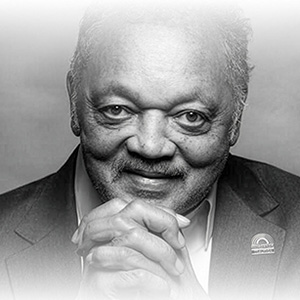
A quiet reverence swept across the nation on Feb. 17 with the passing of civil rights leader Rev. Jesse Jackson, as the world lost one of the most prolific humanitarians and steadfast champions of social justice. Rev. Jackson was more than a leader — he was a movement. A warrior for equality in the 20th century, he possessed a rare and masterful ability to galvanize people across race, gender, class, and faith.
His rallying cry, “Keep Hope Alive,” became more than a slogan — it grew into a spiritual anthem that stirred optimism and forward-thinking action among millions. In moments of national despair, Jackson’s voice was a reminder that progress was still possible and that unity was still powerful.
Born in Greenville, South Carolina, Jackson came of age during the era of Jim Crow segregation. Despite the harsh realities of the time, he demonstrated exceptional academic and athletic talent, earning a scholarship to the University of Illinois. He later transferred to North Carolina A&T State University, where he completed his bachelor’s degree in sociology — a discipline that would deeply inform his life’s work.
While still an undergraduate, Jackson became actively involved in local civil rights demonstrations. By 1965, he had fully immersed himself in the Civil Rights Movement. He participated in the historic Selma to Montgomery marches alongside Dr. Martin Luther King Jr., an experience that led to his involvement with King’s Southern Christian Leadership Conference (SCLC). Jackson eventually rose to serve as director of its economic branch, focusing on empowerment and opportunity.
After departing the SCLC, Jackson founded Operation PUSH (People United to Save Humanity), an organization dedicated to economic justice and educational advancement. Years later, he helped establish the National Rainbow Coalition, expanding the fight for equality to include African-Americans, women, the poor, and the LGBTQ+ community. The two organizations ultimately merged to form the Rainbow/PUSH Coalition, which became a powerful force for advocacy and change.
Jackson also broke political barriers. He served as a shadow senator for the District of Columbia and made history as the second African-American to mount a serious national campaign for the presidency in 1984 and again in 1988. His campaigns energized millions and reshaped the national political conversation around inclusion and coalition-building.
Beyond domestic advocacy, Jackson played a pivotal role on the international stage.
Throughout the 1980s and 1990s, he successfully negotiated the release of American captives abroad, demonstrating his diplomatic skill and moral authority. In recognition of his lifelong service to humanity, he was awarded the Presidential Medal of Freedom by President Bill Clinton.
Today, in moments when hope may seem on the verge of extinction, we can still hear the echoes of Rev. Jackson’s enduring mandate: “Keep Hope Alive.” His life stands as a testament to faith in action, courage in the face of injustice, and the unwavering belief that change is possible when people stand together.
His voice may be silenced but his legacy continues to speak with the strength and dignity that defined his extraordinary life.





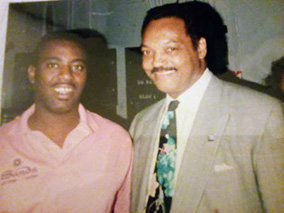
LETTER FROM THE PUBLISHERS: Push The Legacy Forward
Date posted:
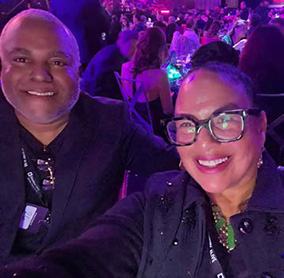
We are proud to present this special Black History Month 2026 issue, featuring an exclusive behind-the-scenes look at the Historic Moulin Rouge Hotel & Casino through the eyes of one of its original dancers: Anna Bailey.
While many stories have been told about the Moulin Rouge, few come directly from someone who lived its history in 1955. From her journey from Brooklyn to Las Vegas, Bailey’s personal account gives us a unique perspective on this landmark — the first integrated hotel and casino in the country — where Black and white guests came together to enjoy entertainment, food, and gaming. We couldn’t imagine a more fitting story to share during Black History Month.
This issue also highlights the recent Martin Luther King Jr. Parade, a true celebration of unity and community. Thanks to the dedication of Clark Gabriel McCarrell Jr., our official Las Vegas Black Image Magazine photographer, we are able to share striking images that capture the spirit of Black Las Vegas. Clark’s work continues to bring the vibrancy of our community to life, earning well-deserved recognition as an award-winning photographer and man of character.
Among the parade highlights, we were inspired by the “Historic Brotherhood Westside” — a group of men celebrating the contributions of the Historic Westside, Las Vegas’ predominantly African American neighborhood. Founded by Rickey Mickey Ormond, this was their first year participating in the parade, and their presence exemplified community pride and unity. We also celebrated the contributions of longtime community supporters like renowned Marlon “DJ Thump” Rice, business consultant Tiffany Ward, Nevada Partners Executive Director Lizette Collins, and Ward 5 City Councilwoman Shondra Summers Armstrong, who took time to congratulate the many young people participating in the event. Additionally, the staff of the Las Vegas-Clark County Library and local sororities and fraternities brought joy, love, and togetherness to the parade.
We extend heartfelt thanks to our loyal advertisers, executive publishing team, and contributing writers, whose dedication and creativity make each issue possible.
Here’s to celebrating Black history, community, and the stories that inspire us all.
Rise,
Charles Tureaud & Kimberly Bailey Tureaud
Publishers
(702) 615-8216
cdalasvegas@gmail.com
LasVegasBlackImage.com
Part I: Race In America, Where We At?
Date posted:
BY LOUIE OVERSTREET

With this column and two more to follow, I will attempt to frame America’s major unresolved issue of race.
The Civil War was to have ended the debate over what should be our nation’s path forward on matters of race. However, efforts by Presidents Johnson and Hayes, as well as a spate of Jim Crow laws, lynchings, and all types of discriminatory practices hampered America’s march of progress.
While it would be less than honest to deny that America’s march has experienced measurable progress along a number of fronts, it can be argued race remains the primary reason for the division that exists in America today.
As a starting point, I offer for consideration my belief that race issues have reached a level of divisiveness not seen in decades. As such, race needs to be given heightened attention, to ward off Americans experiencing a repeat of the mass protests and riots from back in the 1950s and 1960s.
Back then it was Blacks aided by whites addressing the issues of access to education, public accommodations, and voting rights. Shortly thereafter, the cause was for equal rights for women.
However, Hispanics pretty much sat things out. While not suggesting, LULAC President’s Felix Tijerina statement in 1956 was the universal sentiment of Hispanics, it was generally understood to be the attitude of Hispanic Americans at the time. He stated, “Let the Negro fight his own battles. His problems are not mine. I don’t want to ally with him.” Today, the primary focus is efforts by Hispanics and Whites to promote humane immigration policies.
Sadly, today many Blacks are sitting this one out, based on the belief, “What goes around comes around.”
However, the struggle by Blacks and Whites to stop efforts to erode voting rights and the eradication of our contributions to American history remains a challenge.
Over a month ago, I asked a number of Facebook friends to help frame the issue of race from their life experiences. Next month, we will discuss their well-reasoned concerns.
HISTORIC BLACK VEGAS: Marble Manor Documentary: Preserving a Westside Legacy
Date posted:
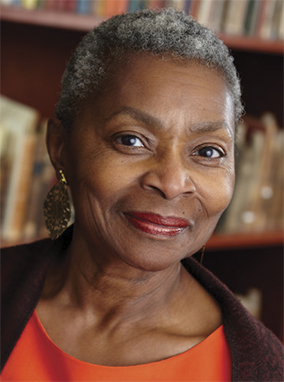
BY CLAYTEE D. WHITE
In 1953, Marble Manor became home to a growing number of Las Vegas residents at a time when adequate housing was scarce — especially for African-Americans who were barred from living in many parts of the city. What began as a necessary housing development soon became a cornerstone of community life on the Historic Westside.
Now, as we prepare to launch an oral history project and documentary chronicling Marble Manor’s legacy, we are asking for your help.
Before the cameras roll, the research must deepen. We are working to uncover more of the development’s untold stories so that thoughtful questions can be asked, facts can be clarified and amplified, and longtime residents can share personal memories of pivotal moments. Early accounts reveal that an active gang culture existed in Marble Manor in its earliest years, spilling over from surrounding communities. But that is only part of the story. What else defined daily life in the 1950s? What stories remain unspoken?
Integration reshaped Las Vegas beginning in 1960, and by 1969, unrest and riots marked a turbulent era on the Westside. How did those watershed moments impact Marble Manor and the families who lived there? Did you — or someone in your family — call Marble Manor home during that decade? Your voice matters. Your memories are vital to completing this historical record.
Though I have retired from UNLV, my commitment to preserving this history remains strong. Please reach out at Claytee.white@unlv.edu to participate. Interviews are conducted in a comfortable, respectful setting. We do collect audio and video footage, but our professional camera team will ensure you feel at ease — and look your best. Consider being a “star” for an hour or 90 minutes in service of history.
Meanwhile, Marble Manor stands on the brink of transformation.
The original single-story buildings are being replaced with a thoughtfully designed, multilevel community. Plans include four-story structures with varied rooflines, townhouses, warm color palettes accented with brick patterns, and culturally sensitive architectural elements. The new development will triple the current number of units and introduce segmented parking areas with greenery, numerous walking paths, barbecue pits, gazebos, playgrounds, and community gardens where residents can grow vegetables. Retail spaces and a daycare center will further serve families. This ambitious redesign is unfolding under the leadership of architect Melvin Green.
Demolition has already begun. Construction is projected to span eight years, progressing in stages — residents will temporarily relocate from designated sections, demolition and rebuilding will follow, and families will move back into newly completed units. It is a careful balance between renewal and continuity.
With the expansion of Marble Manor, the nearby Sam Cherry development on Jefferson, and new housing near Nevada Partners on Lake Mead, there is hope that thoughtful growth — aligned with community specifications — will continue along Jackson Street.
And then there is the question of identity.
From 1938 to 1939, Harmon Percy Marble served as mayor of Las Vegas. According to historical accounts, he had a passion for photographing Native American nations and an interest in low-income housing, which led to his name being assigned to Marble Manor. Yet today, as the Westside experiences rapid gentrification, we must ask ourselves: how do we preserve the significance of this area as the community that welcomed Black families when they were prohibited from living elsewhere in the city? (Only a few lived in Four Mile.)
Perhaps one way is through naming.
As Marble Manor is rebuilt, should it be renamed to reflect its historic identity as a Black neighborhood? How do we honor both the past and the promise of the future?
History is not just about buildings—it is about people. And without your voice, the story remains incomplete.
PEACE: Flowing like water
Date posted:

BY KIMBERLY BAILEY-TUREAUD
In a world that never seems to stand still, we often feel the tremors of change beneath our feet. Seasons, conversations, and relationships shift. Even our inner landscapes evolve in quiet, unseen ways.
With each movement can come discomfort — the unsettling awareness that we are no longer standing where we once were. Yet perhaps discomfort is not a warning, but an invitation.
The ups and downs of life carry subtle vibrations, whispering directions to our spirit. Sometimes they call us forward. Sometimes they urge us to be still. Movement itself is activism — the sacred act of choosing how we respond. We either activate our inner pursuit of peace or allow ourselves to be directed by forces outside of us. There is always a choice.
Nature, in its infinite wisdom, offers us a gentle teacher: water.
Water does not resist its journey. It flows. It adapts. It receives. It teaches us that navigation is not about force, but about alignment. The grace with which water moves becomes a metaphor for how we might sustain our relationships and our own becoming. When we give grace — free from harsh judgment — we allow life to integrate as it will, trusting that every bend belongs to the larger stream.
Stand beside a quiet river and listen.
The flow commands silence. In that stillness, you can hear the ripples brushing against stone, the soft surrender as water glides around obstacles that once seemed immovable. The rocky base does not stop the river; it shapes its song. The pathway reveals itself not through control, but through trust. Even as the current moves toward the unknown, it does so without fear.
Water does not argue with the terrain.
There are moments when the river swells beyond its banks, spilling wide into open spaces, reminding us that life will not always stay within the boundaries we prefer. Control dissolves in these moments. And yet, even in expansion, there is purpose.
The lesson is clear: life unfolds in stages, and we are meant to move with them, not against them.
Water is patient.
A still pool waits quietly, offering refreshment without demand. It gives freely. Waves crash against steadfast shorelines, only to retreat with calm dignity. There is strength in that rhythm — approach, release, return. No resentment. No struggle.
Just the eternal dance of engagement and surrender.
So too will we encounter the ins and the outs, the arrivals and departures, the surges and the retreats. They are inevitable. But if we choose to live like water — freely, fluidly, faithfully — we discover that peace is not something we chase. It is something we align with.
When we soften, we flow. When we release, we expand. When we trust, we arrive.
Be like water. And let grace carry you home.
LIVING: FOOD FOR THE SOUL
Date posted: February 14, 2026
Cajun Pan-Seared Tilapia, An Affordable, Healthy Favorite

Your health matters — and this Cajun pan-seared tilapia is the perfect quick, flavorful dish to satisfy your taste buds while supporting a balanced lifestyle. Simple, affordable, and packed with bold seasoning, it’s ideal for a weeknight dinner or a light, satisfying meal
INGREDIENTS
- 1 package tilapia fillets (fresh, thawed, or frozen)
- 2 tablespoons olive oil, divided
- Juice of 1 lemon
- 1 tablespoon cayenne pepper
- 1 tablespoon garlic powder
- 1 teaspoon black pepper
- 2 teaspoons dried parsley
- 2 teaspoons onion powder
- 2 teaspoons dried rosemary
DIRECTIONS
1. Rinse the tilapia fillets under cool water and pat dry with paper towels. Place on a plate or shallow dish.
2. Drizzle 1 tablespoon of olive oil over both sides of the fillets. Squeeze lemon juice evenly over each piece.
3. In a small bowl, combine the cayenne pepper, garlic powder, black pepper, parsley, onion powder, and rosemary. Sprinkle the seasoning mix evenly over both sides of the tilapia.
4. Heat the remaining 1 tablespoon of olive oil in a large skillet over medium heat.
5. Once the pan is hot, carefully place the fillets in the skillet and cover. Cook for 5–8 minutes per side, or until the fish flakes easily with a fork and develops a light golden crust.
6. Turn off the heat, keep the pan covered, and allow the fish to rest for 3–5 minutes.
7. Plate and serve with stir-fried spinach and quinoa, if desired. Enjoy!
LIVING: PLANTING YOUR SEEDS
Date posted:
Bitter melon and fighting diabetes

Diabetes is a chronic condition that disproportionately affects the Black community. It occurs when the body does not produce enough insulin — or cannot use it effectively — making it difficult to properly process glucose in the bloodstream.
Las Vegas’ climate is ideal for growing melons, including bitter melon, also known as kerala. This vine plant has long been associated in traditional practices with supporting the management of Type 2 diabetes.
Some suggest boiling a kerala, cutting it into pieces, and consuming it with the seeds in the morning and evening. However, bitter melon should not be taken during pregnancy. As always, consult a healthcare professional before adding any herbal remedy to your routine