

‘He felt that his music was … a form of healing’
July 14, 2026 by agutting@reviewjournal.com
Filed under Cover Story, Feature
QUESTIONS & ANSWERS: BILL WHITFIELD
It was a dreadful day — June 25, 2009 — that many still remember as the day we lost the King of Pop. Michael Jackson’s passing was ruled a homicide, caused by acute propofol and benzodiazepine intoxication administered by his personal physician, Dr. Conrad Murray. But controversy still echoes in every conversation about Jackson’s death.
The new “Michael” film — recently ranked among the highest-grossing movies in history, reportedly earning $970 million worldwide and nearing the $1 billion milestone — has reignited global interest in the mega-star.
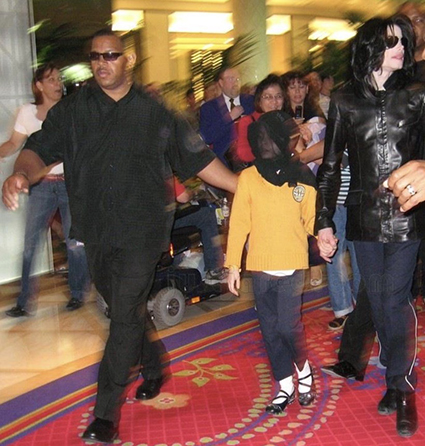
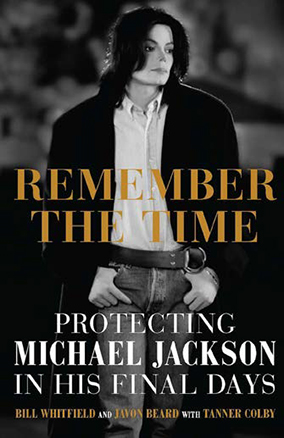
Las Vegas Black Image Magazine sat down exclusively with Michael Jackson’s chief of security, Bill Whitfield, who worked for Jackson during the last three years of his life. Whitfield is also the author of “Remembering the Time: Protecting Michael Jackson in His Final Days.”
You worked for Michael Jackson as chief of security?
Yes, I was his chief of security for the last three years of his life.
It’s interesting that your name is Bill — the same as Jackson’s longtime security chief, Bill Bray, who was portrayed in the new film.
Yes, that is what I hear. Mr. Jackson would often say that I reminded him of someone who used to work for him.
Have you seen the ‘Michael’ movie that is getting so much acclaim?
No, I didn’t see the movie.
You didn’t want to see it?
No, I didn’t. Not right now.
What is the biggest misconception people have about Michael Jackson?
That he was really misunderstood.
What would you like people to know about Michael Jackson — things you can share from your close personal and professional relationship with him?
I was with him every day for the last three years of his life. I want people to know that Mr. Jackson was misunderstood. He meant well. He felt that his music was like an antidote — a form of healing. He was very compassionate about sharing love in the world. He really believed his music was a kind of cure, and he was passionate about his fans. He wanted to see the younger generation come together and be more creative. Mr. Jackson loved all children. He felt they were innocent and just needed the tools to succeed. He did a lot more than people realized behind the scenes. For example, he donated over $300 million to HBCUs — historically Black colleges and universities.
For Michael Jackson to give HBCUs that much money, do you think he was a conscious Black man?
Yes, he was. Mr. Jackson helped a lot of people, and it was never reported. He was very much aware that he was a Black man in America. He knew who he was. There were a few times when I witnessed that side of him come out.
What did Michael Jackson feel about people wanting to make movies about him or his family?
Projects like the “Michael” movie weren’t being discussed while he was alive. Nobody was talking about doing a film on him then. He always wanted his music shared, though. There were times when people would call and ask if they could sample his music, and he had no problem with that. He never charged anyone who sampled his work. He felt that as long as his music was out there, it would live on.
Did Michael Jackson believe the “This Is It” documentary would give audiences a real glimpse into who he was?
The “This Is It” documentary was made in preparation for what would have been his final concert tour. It was promotional material for the worldwide shows. He never got to do the tour. He was initially scheduled for ten concert dates, but the promoters increased it to fifty shows.
Mr. Jackson didn’t think he could physically do fifty shows — but they scheduled the additional dates anyway.
Mr. Jackson wasn’t a big guy. All that performing was hard on his body. People often ask me what I think killed him. My number one answer is stress. I really believe it was the stress he was under at that time.
He was stressed about the This Is It world tour?
He was stressed about a lot of things. We have to keep in mind that, as a man who had faced charges of harming children, that would be hard for anyone to get over. I think that experience really hurt him and ultimately changed him.
Did he ever talk about where that stress came from? Did he mention enemies who wanted to hurt him?
Mr. Jackson often used the word “they.” He would say, “They want my music and my catalogue,” and “They don’t want me to be as big as I am.” The only people I took him to be referring to were record executives.
Most people don’t believe that’s how the music business works.
It’s real. When you become too big and too powerful — when you can say “no” — they don’t like that.
Michael Jackson was close to his mother, Katherine Jackson?
Yes, he was very close to his mom.
There’s another interview where you recalled Michael’s family coming to his home, and Michael agreeing to see his brothers but not his sister, Janet Jackson. Can you speak to that?
I think a lot of people look at the Jackson family as icons living some kind of perfect life. And because both Mr. Jackson and Janet Jackson were icons in the music business, people assume they had a flawless relationship. But you have to understand — they were family. They didn’t look at themselves as celebrities with each other. Janet was Mr. Jackson’s youngest sister, and they related to one another the way any siblings do. Whatever was between them, they handled it the way all families handle things.
I didn’t hear from his family often. When they wanted to reach Mr. Jackson, they had to call me first. I would let Mr. Jackson know who had called, and he would either respond or not. I heard from his mother frequently, but not from the rest of the family. The outside world assumes the Jackson family was one big, harmonious unit — but it was not.
For whatever reason, that particular night when the family came to the house, Mr. Jackson said he would only see his brothers. He didn’t say he didn’t want to see Janet — and I’m not even sure he knew she was there with them.
Did he ever tell you what his brothers talked to him about?
Not too much. They spoke for about twenty minutes, alone. One thing he did say to me the next morning was, “My brothers wanted to know if I was doing drugs and asked to see my arms.”
Was that because he was receiving IV treatments to help him sleep?
At that point in time, there was no Dr. Murray. There were no issues I was aware of with sleep. I knew he had insomnia, but no one was there helping him sleep. None of that was happening yet.
Why do you think Janet Jackson and Michael’s daughter, Paris, didn’t support the “Michael” film?
What I’m aware of is that neither Janet nor Paris was involved in the movie. They felt that some things included weren’t truthful, and that some things that should have been included were left out. They simply had a different creative opinion about what the film portrayed. How deep that goes, I’m not sure. But again, I haven’t seen the movie myself.
Would you ever have relaxed, casual conversations with Michael Jackson?
Sometimes we’d talk while driving in the car. He would occasionally call me to come to his home just to chat. He liked talking about all kinds of things — music, women, other artists. He loved talking about Africa. He would say, “Africa is the most beautiful place I’ve ever seen,” and that Africa is never depicted the way it truly is.
Did Michael Jackson like Black women?
Absolutely. Yes, he did.
Michael Jackson lived in Las Vegas for a time. What did he enjoy doing here?
When his children were young, we would rent out the Mini Grand Prix Family Fun Center off the 215 freeway, and Mr. Jackson and his kids would have fun there for a few hours. There were also discussions with Steve Wynn about a residency, and talks about building Mr. Jackson his own arena to perform in.
Did Michael Jackson ever talk about the historically Black areas of Las Vegas, or the historic Moulin Rouge Hotel — the first integrated hotel in the country?
We never discussed that specifically. But he once asked me if there was a homeless area in Las Vegas. I told him yes. He asked me to take him there. So I drove him to downtown Las Vegas, around Main Street and Bonanza. He saw a large homeless population and was genuinely shocked. He kept saying, “I can’t believe there are so many homeless people when Vegas is so rich in history and wealth.” He couldn’t understand how a city like Las Vegas could have so many people without homes.
Was Michael Jackson very political?
He mentioned wanting to vote when Obama ran for the presidency, and he believed Obama would win. He was very aware of what was going on politically — especially in Hollywood. He would often say that Hollywood was very racist. Mr. Jackson had a lot of plans for doing big things. He was in the process of purchasing Marvel Comics, along with the rights associated with the original Batman portrayer, Adam West.
What musical artists did Michael Jackson admire?
He thought Chris Brown was great and even called Chris on his birthday once. He also liked Ne-Yo and Kanye West — he listened to their music. And he liked Beyoncé.
What does your book, “Remembering the Time: Protecting Michael Jackson in His Final Days,” capture that movies and documentaries don’t?
My book brings normalcy to Michael Jackson. It talks about who he was as a man, as a person, and as a father. About how immeasurably big he was — and how profoundly lonely.
Bill Whitfield currently resides in Las Vegas and operates Battle Born Security Services. He has established his book as a nonprofit and uses a portion of the proceeds to feed the hungry in partnership with Three Square. Book available at:
Rememberthetimebook.com