

‘It’s a style of music that brings people together’
June 14, 2026 by agutting@reviewjournal.com
Filed under Cover Story, Feature
QUESTIONS & ANSWERS: RALPH JOHNSON
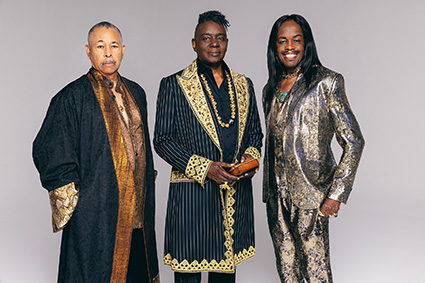
Like the elemental forces of nature that inspired their name, Earth, Wind & Fire continues to reign as one of music’s most enduring legends. From the soulful urgency of “That’s the Way of the World” to the timeless joy of “September,” their catalog — which includes “Sing A Song,” “Reasons,” and “After the Love is Gone” — remains as vital today as ever. Founded in 1969 by the visionary Maurice White, the group scaled creative heights that few artists have matched and even fewer have sustained.
Now, with Questlove’s highly-anticipated documentary “Earth, Wind & Fire” set to open the Tribeca Film Festival this month before debuting June 7 on HBO, original member Ralph Johnson steps forward with his own story to tell. An award-winning musician, songwriter, percussionist, and vocalist, Johnson has spent decades performing and recording with EWF and lending his talents to artists including Howard Hewett, the Temptations, and Blue Magic. In this exclusive interview, he opens up about the band’s extraordinary legacy — and introduces his new memoir, “Rhythm & Fire: A Life in Harmony with Earth, Wind & Fire.”
What inspired you to write this book?
When people ask me that question, I answer with a question of my own: why not now? After 55, 56 years with Earth, Wind & Fire, the time felt right. We just returned from our spring tour, and soon we’ll be heading to New York for the premiere of Questlove’s documentary on the group. It all came together at the perfect moment.
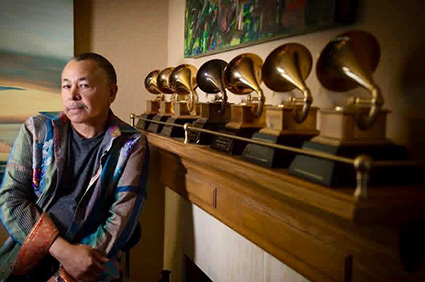
How was it working with Questlove on the HBO documentary?
The documentary is laid out chronologically, starting at the very beginning with Maurice White and his vision for Earth, Wind & Fire. Questlove did an excellent job taking us through that journey. The three original members — myself, Verdine White, and Phillip Bailey — all sat down for interviews, and we are truly excited about it.
EWF has been inducted into the Rock & Roll Hall of Fame, received multiple Grammy Awards, and has a star on the Hollywood Walk of Fame. Let’s go back to the beginning — how did you join the band?
It was the early ‘70s, and I was playing with a group at a club called Maverick’s Flat on Crenshaw Boulevard here in Los Angeles. Maurice and Verdine came to town and walked into the club one night while I was performing. They asked for my number, called me up, and invited me to audition. I met up with Verdine and their guitarist, Michael Beale, and we just started jamming together. It felt natural from the start. Then the phone rang — Maurice White was on the other end — and I overheard Verdine say, “He’s the cat.” And we kind of went from there.
What do you think are the secret ingredients that make Earth, Wind & Fire’s music like no other?
It all starts with a groove. Duke Ellington said it best: “It don’t mean a thing if it ain’t got that swing.” We always tried to build our tracks from that foundation and then elevate them with meaningful lyrics. I actually say this in the book — it was the right band, at the right time, with the right record company, and the right label president. That was Clive Davis.
Do you think the fusion of jazz, R&B, and live horns contributed to making EWF’s sound so distinctive?
Absolutely. Maurice White came from a deep jazz background — he was Ramsey Lewis’ drummer for years. Then one day he woke up and said, “I’m going to start my own band.” Ramsey looked at him like he was out of his mind. But he pulled it off. Think about that: how many jazz drummers leave a jazz band and go on to create a pop and R&B group that conquers the world?
It’s remarkable how you, Verdine White, and Phillip Bailey have kept the group together and continue touring to this day.
The three of us have been together since our twenties, and we’ll all be turning 75 this year. But we’re still going strong. People still want to hear our music — the hits they grew up with, the songs that made them feel something. Honestly, our fans aren’t looking for new music from us, and that’s part of why we haven’t gone back into the studio. We’re giving the people what they love.
Do you think EWF’s sound is the kind of unifying music the world still needs today?
Yes, absolutely. It’s a style of music that brings people together. You can see it in our audiences. The diversity is remarkable. Our music transcends race, religion — all of it. That’s always been one of EWF’s greatest gifts.
Which artists today do you think will stand the test of time?
Every time Bruno Mars puts out a song, I’m genuinely impressed. Great energy, a great band, a great show. Maurice never wanted a band that would just stand around on stage — that’s why we’ve always been so committed to our stage production and performance. Speaking of which, we’ll be back at the Venetian Hotel in Las Vegas from October 17 through October 31, 2026.
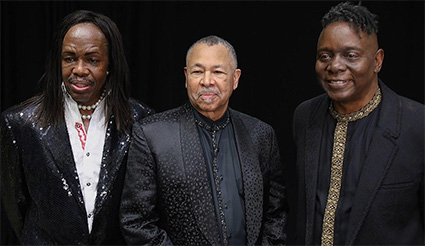
What do you consider some of Earth, Wind & Fire’s greatest milestones?
I want to say first that my book isn’t just a personal memoir — it’s really a book about life lessons: commitment, faith, trust, resilience, and humility. In terms of milestones, one of the earliest and most unforgettable was performing at the California Jam in 1974 at the Ontario Motor Speedway. There were 300,000 people there. That’s the moment I knew we were going to be something big. Our first show at the Forum in Inglewood in 1977 was another one. And performing in London for the first time — those moments stay with you.
I remember Earth, Wind & Fire performing at the Aladdin Theater here in Las Vegas in the late ’70s. How did you achieve such elaborate stage effects at a time when that kind of technology wasn’t widely available?
A big part of it was collaborating with world-class magicians — Doug Henning and David Copperfield. They brought the spectacle, and the music was already there to back it up. When you have both, you’ve got something truly special.
How do you feel about today’s artists sampling classic EWF records?
As a songwriter and publisher, being sampled is something you hope for. Jay-Z sampled a song I wrote on his “Blueprint” album — a track called “Song Cry.” After that, Keyshia Cole and Drake sampled the same song. It created a tremendous revenue stream on the publishing side, and it introduced the music to a whole new generation. The writing and publishing side of the music business is serious business. That’s exactly why Michael Jackson purchased the Beatles’ catalogue.
How can readers get your book?
You can order it right now on Amazon, and the audiobook is available as well.
Subscribe to Enterprising People 702 on YouTube for the full extended interview with Ralph Johnson and much more.